EU agrees to extend IOSS beyond €150: what it means for higher-value eCommerce orders
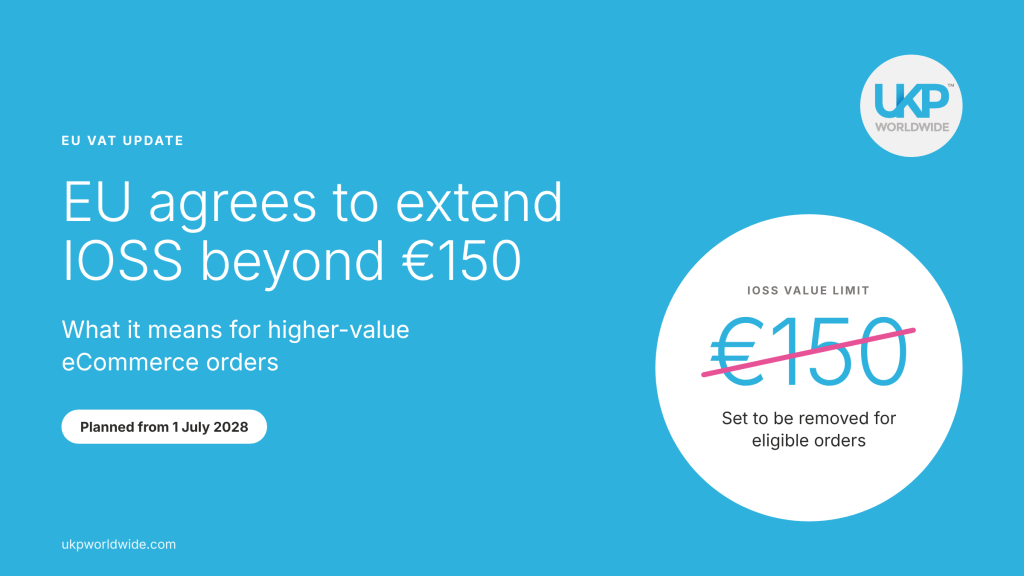
For retailers selling into the EU, the €150 IOSS limit creates a familiar dividing line: orders above it need a different approach to VAT. An agreement reached by the Council of the EU on 9 November brings the removal of that limit a step closer.
The planned extension would allow VAT on higher-value imported consumer orders to be accounted for through the Import One Stop Shop (IOSS) from 1 July 2028. European Parliament consultation and formal Council adoption are still required.
What would change?
Currently, IOSS lets sellers collect VAT at checkout and report it through a single EU registration and monthly return, but only for eligible imported consignments with an intrinsic value of €150 or less. Above that threshold, IOSS cannot be used.
Removing the value limit would bring eligible lower- and higher-value orders within the same VAT collection framework. Products subject to excise duty would remain excluded. The European Commission links implementation to the EU Customs Data Hub becoming operational, with 1 July 2028 the scheduled start date.
For a retailer selling products on both sides of the threshold, that could mean a more consistent checkout experience and less duplication in how VAT is handled across its range.
Customs duty would still need to be addressed
Extending IOSS changes how VAT is collected. It does not remove customs duty. Collecting VAT through IOSS would therefore remain only one part of managing the full cost of an EU order. Any applicable customs duty would still need to be calculated and handled under the customs rules.
Retailers should keep that distinction clear in customer communications: “VAT paid at checkout” should only become a promise of “nothing further to pay” where the delivery arrangements also cover any other applicable charges.
What should retailers consider?
There is no immediate change to the IOSS value limit. However, businesses with significant EU sales above €150 have a useful opportunity to review:
- Checkout and pricing: how VAT and any applicable duty are calculated and presented.
- Delivery arrangements: how checkout information reaches the partners handling customs clearance.
- Marketplace sales: who will collect and account for VAT as platform responsibilities expand.
The Council’s agreement also extends platforms’ VAT responsibilities to higher-value imported sales, making marketplace arrangements another important part of preparation. The opportunity is a more consistent way to manage VAT across EU consumer orders. Making the most of it will depend on checkout, tax reporting and delivery arrangements working together.
Sources
- Council of the EU: Further VAT simplification rules for online sales — 9 November 2026
- European Commission: Council agreement on removing the €150 IOSS threshold — 9 November 2026
- Irish Revenue: Current Import One Stop Shop rules