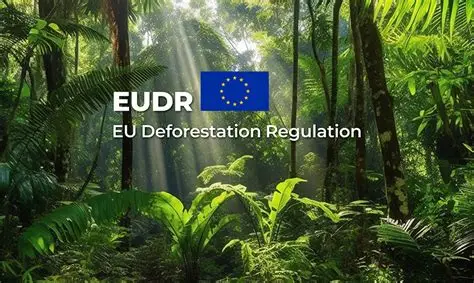
The EU Deforestation Regulation (EUDR) is a major new law designed to stop products linked to deforestation from entering or leaving the EU.
It applies to anyone importing or exporting certain goods – and it will significantly impact customs processes.
What Is the EUDR?
The EUDR requires businesses to prove that specific products are:
Deforestation-free
Legally produced
Fully traceable to the plot of land they came from
Who’s Affected?
Seven key commodities and their products:
Cattle, wood, cocoa, coffee, palm oil, soy, rubber
(including leather, paper, chocolate, tyres, furniture, etc.)
Deadlines
Large/medium companies: from 30 Dec 2025
Small/micro businesses: from 30 June 2026
What Businesses Must Do
Every shipment of in-scope goods must have a Due Diligence Statement (DDS) submitted via TRACES NT before customs clearance.
This includes geolocation, production dates, supplier details and proof of compliance.
Customs declarations must contain the DDS reference number.
Enforcement & Penalties
EU authorities will audit and inspect businesses, with strong penalties for non-compliance, including:
Fines up to 4% of EU turnover
Confiscation of goods
Temporary market bans
Publication of offenders
How to Prepare
Identify in-scope goods
Map supply chains
Collect supplier data early
Submit DDS for every shipment
Keep records for 5 years
Digital tools can help manage traceability and automate compliance.
For UK Exporters
The EUDR applies to any UK business sending covered goods to the EU. Full traceability and accurate data-sharing with EU partners are essential.
For further guidance, support or practical advice on navigating EUDR compliance, contact UKP Worldwide – your customs and compliance specialists.